

Freezing broccoli and cauliflower
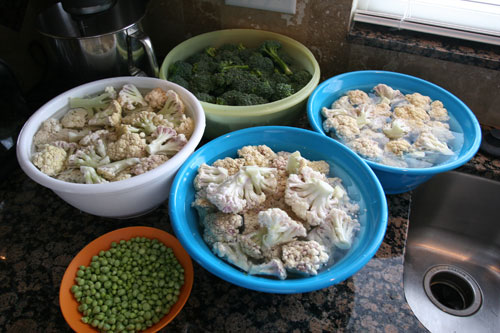
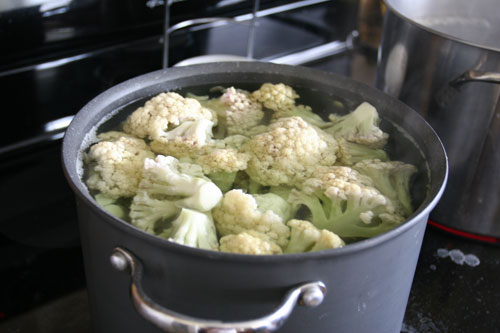
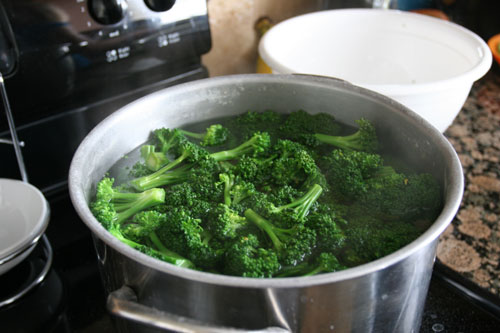
One of the most significant weaknesses in my gardening has been storing my harvest. Gardens aren’t just about fresh produce. People used to live off them year round. With so many people struggling to make ends meet or struggling to establish adequate food storage, I am surprised there are so few gardens. This year I have committed to educating myself on effective storage techniques and significantly adding to the variety and quality of my food storage with the fruits of my garden. There are many ways to preserve and store food including canning, smoking, bottling, drying, and freezing. Each has it’s own advantages and weaknesses and varies in effectiveness depending on the food. For example, I could eat canned green beans with meatloaf every night of the week but would rather eat dirt than canned peas. Of course, if it really came down to it, I would likely choose to supplement the dirt with the canned peas to avoid death. Thus, I would recommend having a variety of food stored in several different methods. Freezing provides the most fresh results. In terms of texture, flavor, and appearance, I believe freezing is hands-down the most successful option. Frozen food is the most delicate food to store however since it is dependent on electricity. There are those that claim they will keep their freezer’s going with a generator but that seems quite unrealistic to me (unless it’s powered by an unlimited resources such as solar or water and you live next to a river). For most of us, eventually, you are going to loose your frozen food once the electricity is out. That shouldn’t deter you however. Your food is going to stay frozen for a good amount of time in the freezer, especially if you keep the door shut and if you have a coffin-style unit (as it doesn’t allow the air to spill out when you open the door). Being prepared with a generator to at least get you through a hiccup in service would also be very wise. If you encounter an emergency, simply start eating your frozen items first. Also, many of the scenarios that we should be prepared for are not catastrophic and will not be experienced without electricity. Whether you are encountering hard times financially or quarantined from the next-animal-on-the-list flu, having “fresh” frozen food on hand will really make a difference in your menu. With harvest from my Spring garden winding down, it is time to preserve the bounty. In this article we’ll cover freezing broccoli and cauliflower. Here’s how: 1. Cut the heads when they are still tight and before they start to flower, separate, or turn yellow. Rinse. 2. Split heads into florettes 1 and a half inches across. You’ll most likely have to half or quarter the cauliflower florettes. Discard leaves and the woody end of the stem 3. Soak in a salt bath for 30 minutes to kill insects (4 teaspoons salt to 1 gallon ordinary tap water). 4. Blanch in a large pot of boiling water for three minutes. This stops the enzymes and kills the bacteria that breaks down food and cause it to decompose. You can use the same water several times. 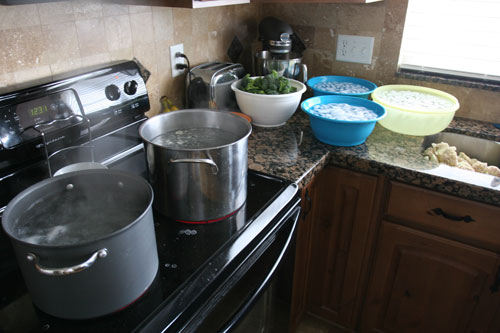
 5. Immediately move from the boiling water into ice water for three minutes. This stops them from being fully-cooked. 6. Remove from ice water, shake in a colander, and then spread them out so that they can dry as much as possible.
 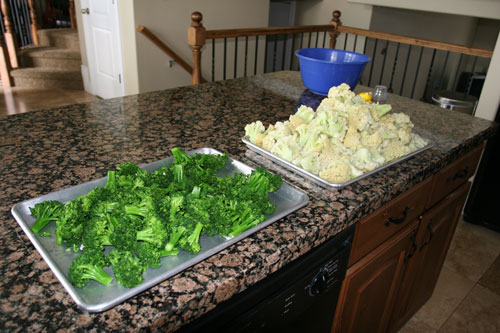 7. Bag and freeze. While you can use a ziplock bag and manually attempt to suck out the air, I would recommend investing in a vacuum sealer. They are extremely easy to use and extend the shelf life of frozen food significantly. For example, vegetables in a ziplock bag are good in the freezer for about eight months. Food in a vacuum sealed bag can last for two to three years. The frozen vegetables also only take ninety seconds or so to cook since they have been blanched previously.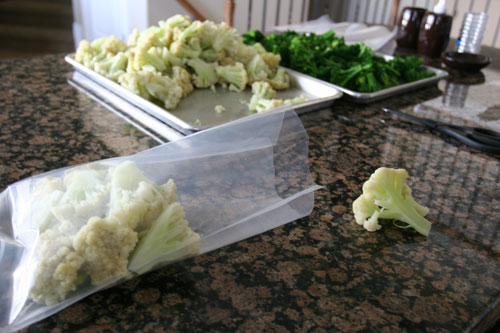
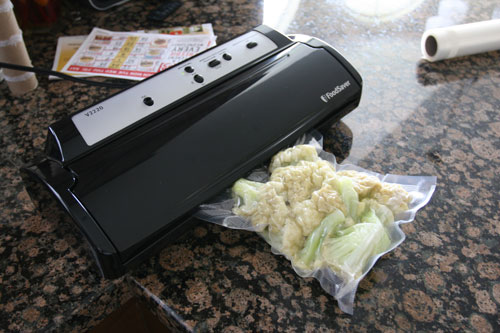
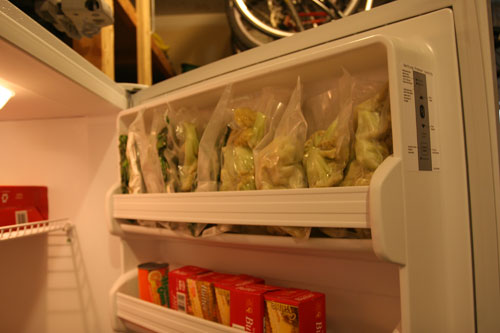 Note that vacuum sealing something as moist as broccoli can prove difficult. You will significantly improve your results by freezing the broccoli individually first or damming the top of the bag with a paper towel to hold back the moisture while the machine seals the bag.