


Microwaves, Faraday Cages, and EMP Protection
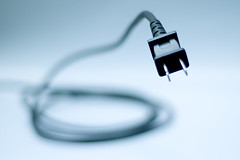 photo credit: t-squared
One of the related risks to a nuclear attack is an EMP blast. Rather than detonating the nuke at ground level and thus destroying infrastructure and human life, the bomb is deployed in the atmosphere, and an EMP blast results. In the former scenario you’d be dead immediately; in the latter, many would die slow deaths, widespread panic would result, and terror would take a drastic toll—all because people wouldn’t have access to their machinery and gadgets that enable them to do all of their basic, day-to-day activities. Just think about all the things you do on a daily basis that require electricity: turn on the sink to brush your teeth; get in the car to get groceries; withdraw cash from the ATM; refrigerate your food; use the internet to follow the news; call your parents; turn on the lights at night. All of these simple, daily tasks require the electricity we enjoy in abundance today. But an EMP blast would immediately change all of that. What can you do to prepare for a possible EMP blast in the future? How can you shield your electronics to ensure that you can play with your iPod in a TEOTWAWKI scenario, or scan the radio for news updates? One option is to shield your gadgets with a Faraday cage. A Faraday cage—named after its inventor Michal Faraday—is essentially nothing more than a simple electromagnetic shield. Basic versions are just metal containers or enclosures that block the penetration of electromagnetic radiation. For one example (that you can purchase), see here. If you’re really adventurous, you can build your own. But me? I’m both a cheapskate and completely lacking in the DIY skill department. So I took the easy route. I bought a microwave. Microwaves are a sort of reverse-faraday cage, in that they are constructed to keep the radiation inside the box. But it works both ways, meaning that the structure also prevents radiation from getting in. I found a cheap microwave on Craigslist, brought it home, and cut off the power cord (so that somebody couldn’t accidentally plug it in and turn it on, thus cooking my toys). Keep in mind that the microwave need not be functional to serve as a faraday cage—all it needs is its original structural integrity, but no electric bells and whistles. Inside the microwave you would put whatever electronic gadgets you would want to have access to in a post-EMP environment. I’ve got a HAM radio, GMRS radio, AM/FM radio, and a few other electronic devices inside of mine. It’s important to realize, of course, that the use of electronic equipment implies having access to necessary batteries or generators, as well as any needed sister devices (i.e. a second radio with which to communicate). So you can store a couple of radios (to communicate with friends/family if somebody needs to leave), or have a HAM radio setup to communicate with remote parts of the country/world that were not affected by the localized EMP. What’s the likelihood of an actual EMP attack? Well, that of course depends on where you live, and who you ask. :) But as in all things, general preparedness implies a broad “what if” mentality that tries to take in as many factors as possible. Having a cheap, old microwave is just one more item to check off the list!